
What Happens During an Electrical Trouble-shooting Visit?
One of the most common questions we hear is:
"What exactly happens during troubleshooting?"
It's a fair question.
Unlike a panel upgrade or EV charger installation, troubleshooting doesn't always come with a neat list of materials and a predictable outcome.
That's because we're not installing something.
We're solving a mystery.
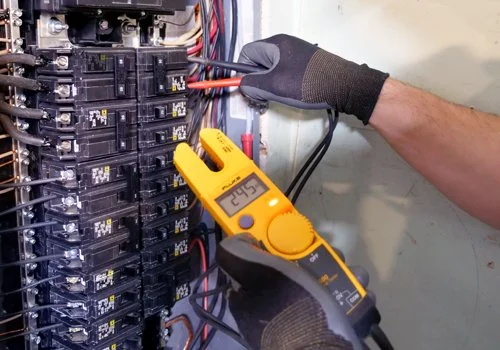
Step One: We Ask Questions
Before we touch a tool, we usually start by asking questions.
Things like:
When did the problem start?
Has anything changed recently?
Does it happen all the time or only sometimes?
What was running when it happened?
Has anyone worked on the electrical system recently?
These questions may seem simple, but they often point us in the right direction immediately.
Electrical systems leave clues.
The homeowner usually has a few of them — even if they don’t know it.
Step Two: We Verify the Problem
You'd be surprised how often this step matters.
Sometimes a homeowner says:
"Half the house lost power."
What actually happened is one GFCI tripped.
Other times a homeowner says:
"One outlet stopped working."
And we discover half the circuit is affected.
Before we can solve the problem, we need to understand exactly what the problem is.
Step Three: We Start Eliminating Possibilities
This is where troubleshooting becomes detective work.
We begin narrowing down potential causes.
We're looking at things like:
Breakers
GFCIs
Switches
Receptacles
Connections
Voltage readings
Wiring paths
Every test tells us something.
Sometimes it tells us what the problem is.
Other times it tells us what the problem isn't.
Both are valuable.
Step Four: Follow the Clues
The interesting thing about electrical problems is that the symptom isn't always where the problem lives.
A dead outlet may be caused by a loose connection in another room.
Flickering lights may be caused by a loose neutral in the panel.
A tripping breaker may actually be a failing appliance.
The visible problem is often just the breadcrumb trail.
We follow it until we find the source.
Step Five: Explain What We Found
Once we've identified the problem, we'll explain what we found and discuss your options.
Sometimes it's a simple repair.
Sometimes it's a larger issue.
Sometimes it's something that should be addressed sooner rather than later.
But you'll know what we're seeing and why we're recommending it.
No mysterious electrician language required.
What If You Don't Find It Right Away?
Sometimes troubleshooting is straightforward.
Sometimes it takes time.
Intermittent electrical problems can be especially challenging because they don't always cooperate while we're standing there.
If you've ever taken your car to a mechanic and the noise suddenly disappeared, you already understand the concept.
Electrical systems can be equally stubborn.
Why Do Electricians Charge for Troubleshooting?
Because finding the problem is often the hardest part.
Replacing an outlet is easy when you know the outlet is bad.
Finding out why the outlet stopped working in the first place is where experience matters.
The value isn't in tightening the screw.
It’s in the years it takes to learn which screw to tighten.
The Bottom Line
Electrical troubleshooting isn't guessing.
It's a process.
We gather information.
We test.
We eliminate possibilities.
We follow the evidence.
And eventually, the electrical system tells us what's wrong.
Sometimes quickly.
Sometimes reluctantly.
Either way, that's what you're paying for.
Not just a repair.
An answer.
Stay legendary.
👣 Want More Information About Your Specific Issue?
Electrical troubleshooting covers a lot of ground. If you're dealing with a particular symptom, these articles take a deeper dive into some of the most common electrical problems we encounter.
Why Are My Lights Flickering?
Learn about loose connections, overloaded circuits, service issues, utility problems, and other common causes of flickering lights.
Why Does My Breaker Keep Tripping?
Understand the difference between overloads, short circuits, ground faults, and nuisance trips—and what your breaker may be trying to tell you.
Why Did Half My House Lose Power?
Discover why part of a home can lose power while the rest stays on, and why the problem isn't always where you think it is.
Why Is My Outlet Not Working?
From tripped GFCIs to hidden wiring problems, learn some of the most common reasons outlets stop working.
