
Why Pool Equipment Rooms Are So Hard on Electrical Panels
Not all electrical panels age the same way.
Some spend decades in a dry basement and look nearly new. Others spend years in harsh environments and show their age much sooner.
Recently, we came across this electrical panel inside a pool equipment building, and it serves as a great example of what moisture, chemicals, and time can do to electrical equipment.
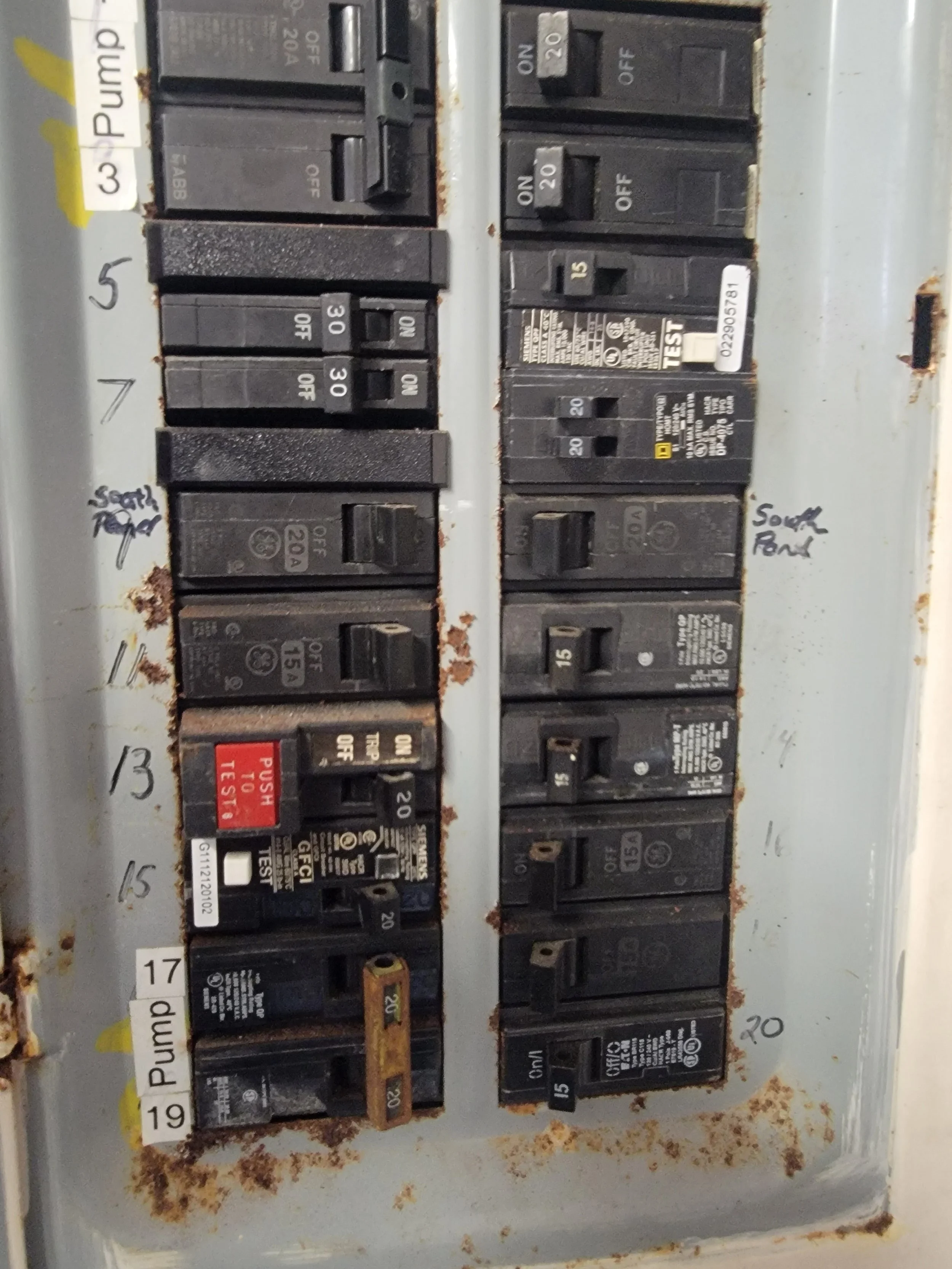
At first glance, the most obvious issue is the rust and corrosion throughout the panel. While it may look like a cosmetic problem, corrosion inside electrical equipment is something we take seriously. Rust can affect electrical connections, damage components, and create reliability concerns over time.
In pool environments, corrosion isn't unusual.
Pool chemicals can create a harsh atmosphere that gradually attacks metal components. Electrical panels, breakers, terminals, and enclosures can all be affected. What starts as minor surface corrosion can eventually become a much larger problem.
This panel also illustrates another issue we encounter from time to time: mixed breaker manufacturers.
A common misconception is that any breaker is acceptable as long as it physically fits into the panel. In reality, electrical panels are tested and listed for specific breaker types. Using the wrong breaker can violate the panel's listing, create inspection issues, and potentially affect how the breaker performs during an overload or fault condition.
Just because it fits doesn't mean it's approved.
As we looked through this panel, we found breakers from multiple manufacturers installed together. While this is a common sight in older equipment, it's rarely something we recommend leaving in place.
Modern electrical codes recognize just how aggressive pool environments can be. That's why equipment serving pools is required to be installed in corrosion-resistant enclosures or located in separate rooms designed to protect electrical equipment from chemical exposure.
When electrical equipment begins showing significant corrosion, replacement should become part of the conversation. In many cases, addressing the problem early is far less expensive than waiting for equipment failures to occur.
The takeaway?
Electricity and pool chemicals don't make great roommates.
If your electrical equipment is located near a pool, chemical storage area, or other corrosive environment, periodic inspections can help identify problems before they become safety hazards or costly repairs.
Stay legendary.
