
Should I Replace My Federal Pacific Panel?
Yes.
Unlike many older electrical panels that simply show their age, Federal Pacific Electric (FPE) Stab-Lok panels have a documented history of serious safety concerns.
If you've heard electricians talk about Federal Pacific panels over the years, this is why.
What Is a Federal Pacific Panel?
Federal Pacific Electric manufactured millions of Stab-Lok electrical panels that were installed in homes across the United States from the 1950s through the 1980s.
At a glance, they look like any other electrical panel.
The problem is what happens when something goes wrong.
Circuit breakers exist for one reason:
To shut off power when dangerous conditions occur.
When a breaker fails to trip during an overload or short circuit, the wiring can continue to overheat, potentially damaging insulation, equipment, and surrounding materials.
Unfortunately, independent testing has shown that many FPE Stab-Lok breakers fail to trip when they should.
And that's where the concern begins.
Why Are They Considered Dangerous?
The most significant issue with Federal Pacific panels is the breaker design itself.
Studies and testing have found that some Stab-Lok breakers fail to trip during overloads and short circuits at rates far higher than what would be considered acceptable for modern electrical equipment.
In simple terms:
The breaker may stay on when it should have turned off.
That's a problem.
Electrical systems rely on breakers to be the last line of defense when something goes wrong.
The Stab-Lok Problem
FPE's unique "Stab-Lok" design has another issue.
Over time, breakers can develop poor connections to the bus bar inside the panel.
When that happens, heat, arcing, and damage can occur.
In some cases, breakers have been found physically welded to the bus bar due to overheating and electrical arcing.
Needless to say, that's not what you want from the device responsible for protecting your home.
The Certification Controversy
Federal Pacific's history became even more concerning when investigations revealed issues surrounding product testing and certification.
A New Jersey court ultimately found that the company had knowingly misrepresented testing data used to obtain safety certifications.
That finding only reinforced concerns that electricians and inspectors had already been raising for years.
Insurance and Real Estate Problems
Even if an FPE panel appears to be operating normally, it can create problems long before an electrical failure occurs.
Many insurance companies view Federal Pacific panels as an unacceptable risk.
Homeowners may encounter:
Difficulty obtaining insurance coverage
Increased insurance scrutiny
Requirements to replace the panel
Delays during real estate transactions
Inspection issues when selling a home
It's not uncommon for a Federal Pacific panel to become a topic of conversation during a home sale.
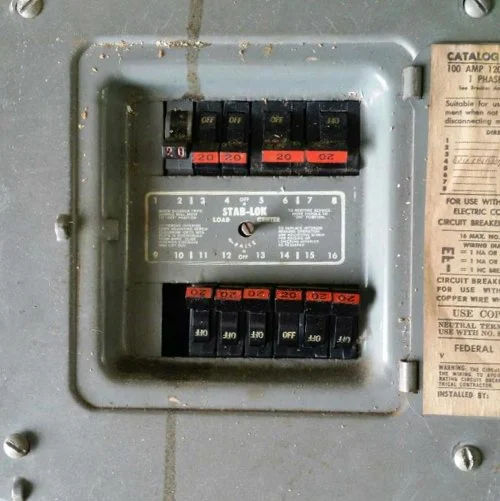
How Do I Know If I Have One?
Most Federal Pacific panels are clearly labeled.
Look for:
Federal Pacific Electric
FPE
Stab-Lok
The circuit breakers look like the ones in the photo
So What Should You Do?
Unlike many electrical upgrades, this isn't usually a question of adding convenience, creating space, or preparing for future projects.
This is a safety upgrade.
If your home still has a Federal Pacific Stab-Lok panel, replacement is generally recommended regardless of whether it appears to be functioning properly.
The concern isn't what the panel is doing today.
The concern is what it may fail to do tomorrow.
The Bottom Line
Most older electrical panels eventually get replaced because they've run out of room.
Federal Pacific panels get replaced because they have a long history of failing at the one job breakers are supposed to perform.
When it comes to electrical safety, that's a risk most homeowners aren't willing to keep around.
