
Is Whole-Home Surge Protection Worth It?
The short answer?
Yes.
In fact, modern electrical codes agree.
Whole-home surge protection has become such a valuable safety feature that it is now required for most new residential services under the National Electrical Code (NEC).
That's a pretty strong endorsement.
But what exactly does it do, and is it worth adding to an existing home?
Let's take a look.
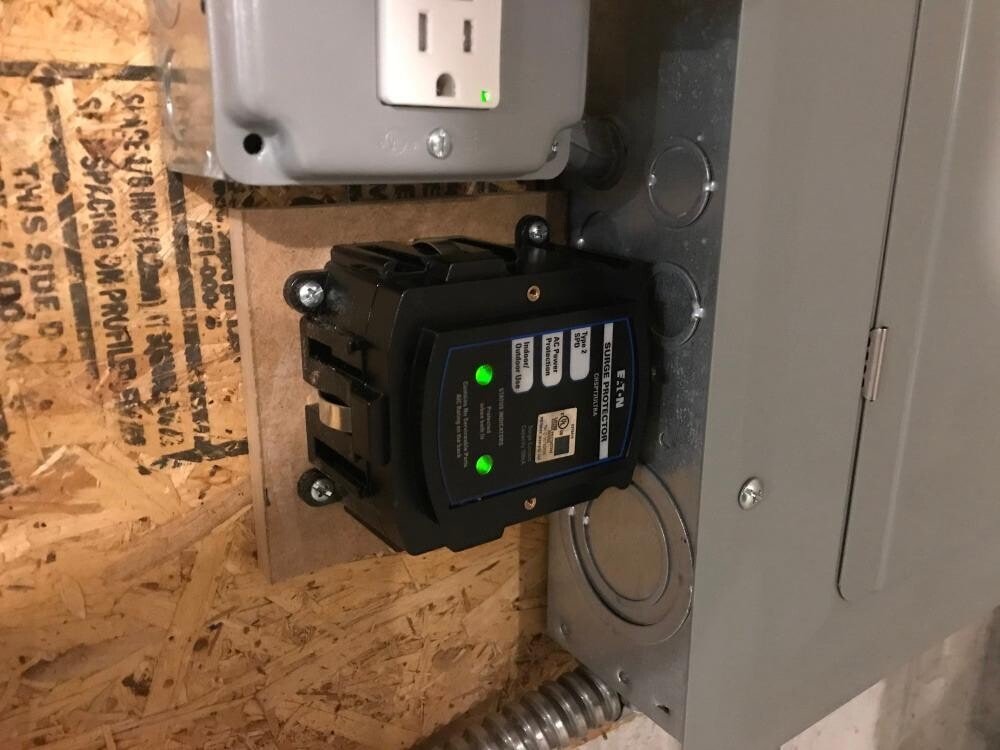
What Is Whole-Home Surge Protection?
A whole-home surge protector is a device installed at your electrical panel that helps protect your home's electrical system from voltage spikes.
Think of it as the first line of defense for your electronics.
When a voltage surge enters your home's electrical system, the surge protector helps divert that excess energy before it reaches sensitive equipment.
And these days, sensitive equipment is everywhere.
Your House Has More Electronics Than Ever
Years ago, a surge might have damaged:
A television
A stereo
Maybe a computer
Today's homes contain far more electronics than most people realize.
Modern homes often contain:
Smart TVs
Computers
Routers
Gaming systems
Appliances
HVAC equipment
Refrigerators
Washing machines
Dryers
Tankless water heaters
Smart thermostats
Garage door openers
Security systems
EV chargers
Many of these devices contain delicate electronic components that don't respond well to voltage spikes.
Aren't Surges Caused by Lightning?
Sometimes.
But lightning isn't the most common source of surges.
Most surges actually originate inside the home.
Every time a large motor starts or stops, small voltage fluctuations occur.
Common examples include:
Air conditioners
Heat pumps
Refrigerators
Well pumps
Shop equipment
These small surges happen every day.
Individually they're minor.
Over time they add up.
Think of it as wear and tear for electronics.
Why Is It Required Now?
The electrical code evolves over time based on safety data and changing technology.
As homes have become increasingly dependent on electronics, surge protection has become more important.
That's why modern NEC requirements now call for surge protection on all new residential services.
The code recognizes what many electricians have been saying for years:
Protecting the home's electrical system protects everything connected to it.
What Does It Cost?
Compared to replacing appliances and electronics, whole-home surge protection is surprisingly affordable.
At Sasquatch Electric, whole-home surge protection starts at $399 when installed as a standalone project.
That price assumes:
A compatible panel using common breaker families such as Homeline, Eaton BR, or Siemens
Available space in the electrical panel
A standard installation without additional panel modifications
If we're already performing a larger project—such as a panel upgrade, EV charger installation, or other electrical work—the cost is often lower since much of the labor is already being performed.
Considering the cost of modern electronics, HVAC equipment, appliances, and smart home devices, whole-home surge protection is one of the most affordable protective upgrades available.
It's not difficult to spend thousands of dollars on equipment connected to your electrical system.
Protecting it starts at $399.
Does It Replace Plug-In Surge Protectors?
No.
Think of surge protection as layers.
The whole-home surge protector handles larger surges entering the home's electrical system.
Point-of-use surge protectors can still provide additional protection for particularly sensitive electronics.
The two work well together.
When Should You Consider Installing One?
If your home doesn't already have whole-home surge protection, it's worth considering during:
Panel upgrades
Service replacements
Generator installations
EV charger installations
Major electrical renovations
Or simply because you'd like an extra layer of protection for the electronics you already own.
The Bottom Line
Not every electrical upgrade is exciting.
Whole-home surge protection certainly isn't the kind of thing guests notice when they walk into your house.
But it may be one of the hardest-working devices in your electrical system.
The electrical code now requires it for all new services.
That alone should tell you something.
It's not there because it looks nice.
It's there because protecting modern homes has become more important than ever.
Stay legendary.
