
Can My Electrical Panel Handle an EV Charger?
Probably.
But not always.
One of the biggest misconceptions about EV chargers is that every installation requires a panel upgrade.
Sometimes that's true.
Often, it isn't.
The only way to know for sure is to look at the electrical system that's already in place.
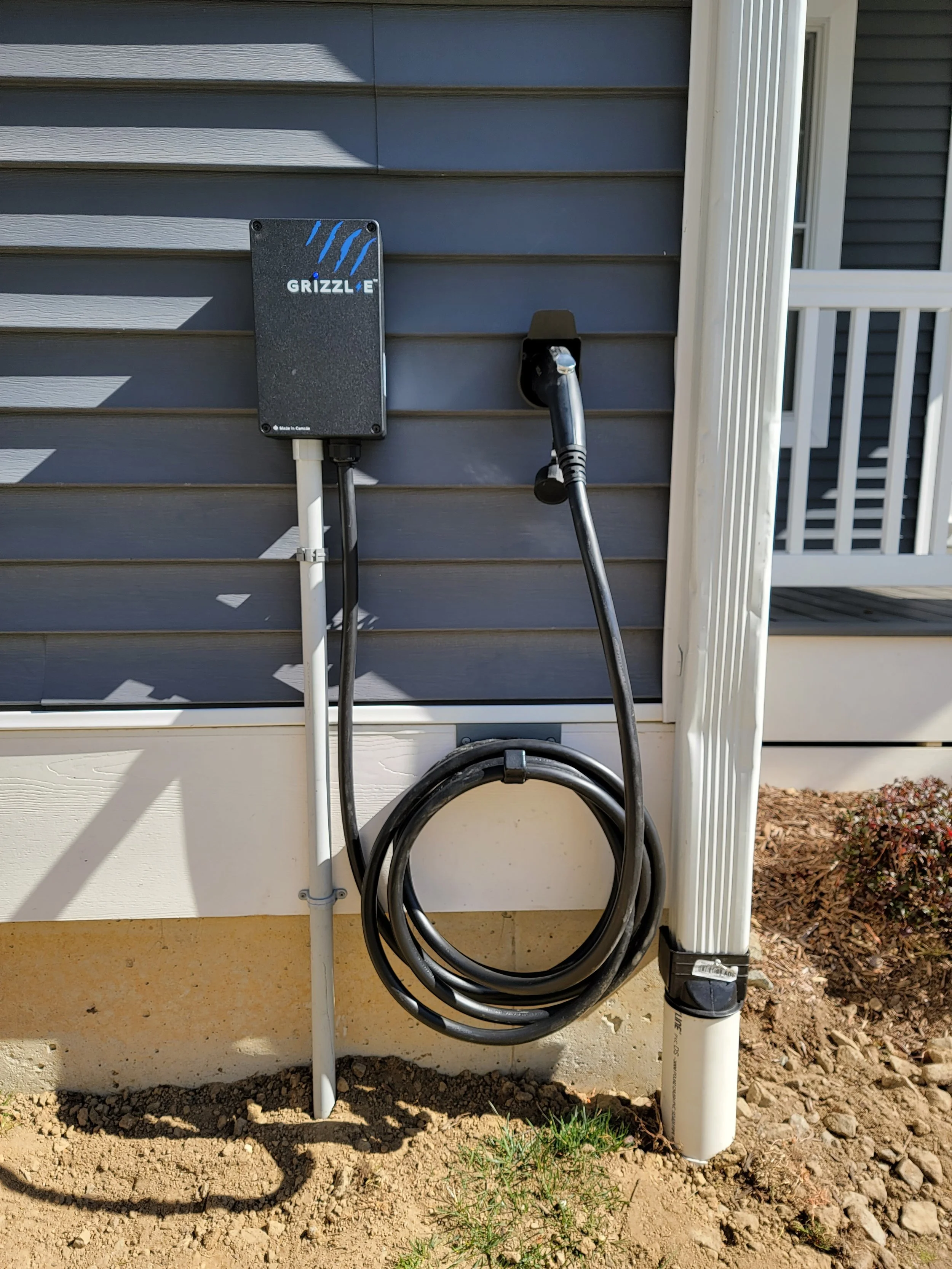
What Does an EV Charger Actually Need?
Most Level 2 EV chargers require a dedicated 240-volt circuit.
Depending on the charger, that circuit might be:
20 amps
30 amps
40 amps
50 amps
60 amps
Usually 50-60 amps.
That's a significant electrical load.
For comparison, many EV chargers use as much power as an electric range, water heater, or HVAC system.
The question isn't whether the charger can be installed.
The question is whether your electrical system has enough capacity to support it safely.
The Three Things We Look At
When evaluating an EV charger installation, we usually start with three questions:
1. Does the Panel Have Room?
Sometimes the answer is easy.
There are empty breaker spaces available.
Problem solved.
Other times the panel is completely full.
That doesn't automatically mean a panel upgrade is required, but it does mean we need to look closer.
2. Does the Service Have Capacity?
This is where load calculations come into play.
Just because a panel has physical space doesn't mean the electrical service has enough available capacity.
We look at things like:
Home size
HVAC equipment
Electric water heaters
Electric dryers
Electric ranges
Pools
Hot tubs
Existing large loads
A properly performed load calculation tells us whether the service can support the additional demand.
3. How Far Is the Charger From the Panel?
Sometimes the electrical system is perfectly capable of supporting the charger.
The challenge is simply getting power there.
A charger installed beside the panel is very different from a charger installed 100 feet away on the opposite side of the house.
Distance affects both labor and material costs.
When a Panel Upgrade Makes Sense
Sometimes an EV charger reveals a limitation that was already there.
We often find:
Older 100-amp services
Full panels
Obsolete equipment
Panels that are already struggling to support modern loads
In those situations, a panel upgrade may be the best long-term solution.
But it's important to understand:
The EV charger didn't create the problem.
It simply exposed it.
When a Panel Upgrade Isn't Necessary
This surprises a lot of homeowners.
Many homes can accommodate an EV charger without a service upgrade.
We've installed chargers on homes with:
Modern 200-amp services
Available breaker space
Adequate load capacity
In those cases, the project can be surprisingly straightforward.
That's why we always recommend evaluating the system before assuming the worst.
What About Load Management Systems?
New technology has created additional options.
In some situations, load management equipment can monitor electrical usage and automatically adjust EV charging to stay within the home's available capacity.
This can allow EV charging without the expense of a full service upgrade.
It's not the right solution for every home, but it's another tool available when capacity becomes a concern.
The Bottom Line
The internet loves simple answers.
Unfortunately, electrical systems rarely cooperate.
Some homes can add an EV charger tomorrow with no major modifications.
Some homes need a panel upgrade first.
And some fall somewhere in between.
The good news is that a quick evaluation usually tells the story.
The goal isn't installing the biggest charger possible.
The goal is installing the right charger for your home, your vehicle, and your electrical system.
Stay legendary.
