
Why Is My Outlet Not Working?
It depends.
The good news is that a dead outlet doesn't automatically mean you have a major electrical problem.
The bad news is that there are quite a few reasons an outlet can stop working.
Let's start with the most common ones.
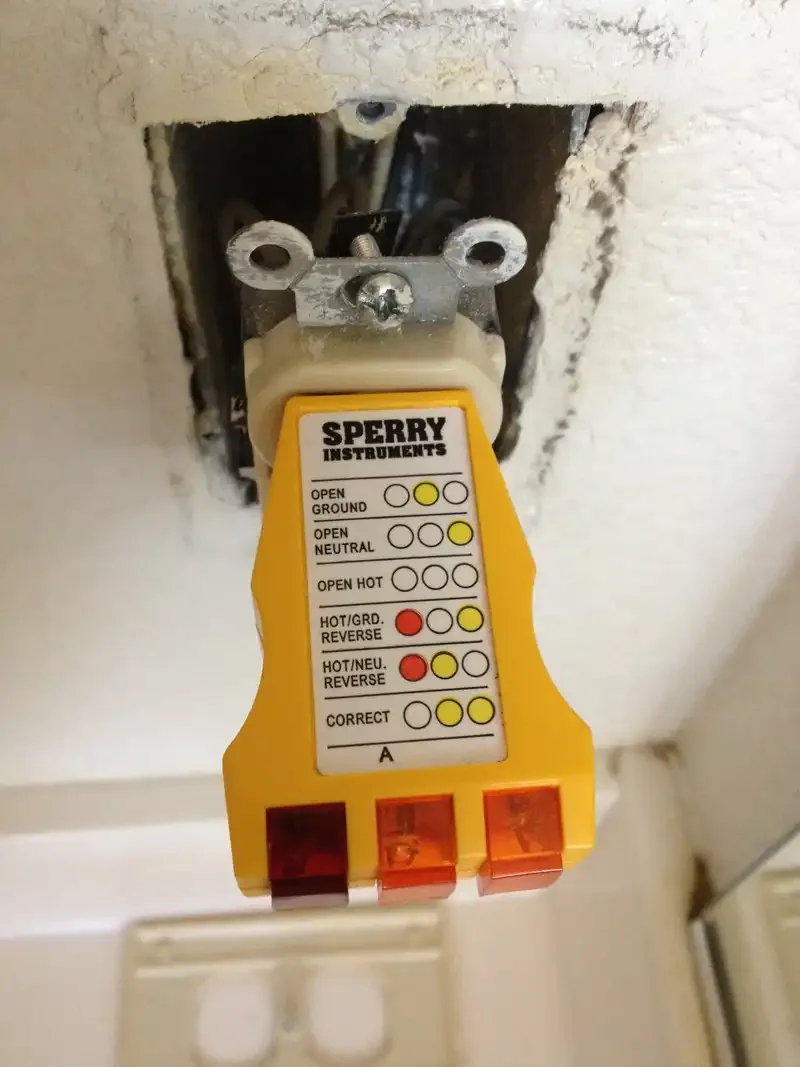
Check the Breaker First
It sounds obvious, but it's worth checking.
A tripped breaker is one of the most common reasons an outlet suddenly stops working.
Sometimes the breaker is fully tripped.
Sometimes it's sitting in the middle and doesn't immediately look off.
Try locating the breaker and resetting it fully.
If it trips again immediately, that's a clue that something else may be going on.
Look for a Tripped GFCI
This is probably the most common cause of a dead outlet.
Many outlets are protected by a GFCI receptacle located somewhere else.
That means the outlet you're looking at may not actually be the device that tripped.
Check nearby:
Bathrooms
Kitchens
Garages
Crawl spaces
Basements
Exterior outlets
Sometimes the fix is as simple as pressing a reset button you forgot existed.
The Outlet May Have Failed
Outlets wear out.
After years of plugging things in and out, the internal contacts can loosen, weaken, or fail.
This is especially common in heavily used locations such as:
Kitchens
Living rooms
Garages
Workshops
Fortunately, replacing a worn receptacle is usually a straightforward repair.
Loose Connections
This is one of the most common problems we find during troubleshooting.
Electrical connections can loosen over time due to:
Heat cycles
Vibration
Age
Improper installation
When a connection loosens, power may stop flowing through part of the circuit.
Sometimes one outlet stops working.
Sometimes several outlets lose power at the same time.
The Problem May Be Upstream
Here's something many homeowners don't realize:
The outlet that stopped working is often not the outlet causing the problem.
Electrical circuits are connected together throughout the house.
If a connection fails at one device, everything downstream may lose power as well.
In those situations, the dead outlet is really just the first symptom you noticed.
The actual problem may be hiding in another room entirely.
Backstab Connections
Some electricians, us included, have strong opinions about backstab connections.
For good reason.
Many older receptacles were installed using push-in connections on the back of the device.
These connections save time during installation but can become unreliable as they age.
We've solved countless "dead outlet" calls by finding a failed backstab connection somewhere else on the circuit.
AFCI and GFCI Protection
Modern homes often include AFCI and GFCI protection.
These devices are designed to detect potentially dangerous conditions and disconnect power.
Sometimes they're doing exactly what they're supposed to do.
If an AFCI or GFCI device trips repeatedly, the goal isn't simply restoring power.
The goal is figuring out why it tripped.
Sometimes It's Not the Outlet at All
We've found dead outlets caused by:
Failed breakers
Loose neutrals
Damaged wiring
Water intrusion
Rodent damage
Improper DIY wiring
Hidden junction boxes
The outlet is simply where the homeowner noticed the symptom.
The actual problem may be somewhere completely different.
What Should You Do?
Start with the easy things:
Check the breaker.
Check nearby GFCIs.
Test other outlets in the area.
Look for patterns.
Did one outlet stop working?
Or did half the room lose power?
Those details help narrow things down quickly.
The Bottom Line
A dead outlet doesn't automatically mean the outlet is bad.
In fact, some of the most common outlet repairs have nothing to do with the outlet itself.
Sometimes it's a breaker.
Sometimes it's a GFCI.
Sometimes it's a loose connection hiding somewhere else on the circuit.
The outlet is just where the mystery started.
The fun part is figuring out where it actually ends.
Stay legendary.
