
The Difference Between "It Works" and "It's Safe"
One of the most common things we hear from homeowners is:
"But it works."
And you know what?
They're usually right.
The outlet works.
The light comes on.
The breaker stays on.
The ceiling fan spins.
The problem is that "working" and "safe" are not always the same thing.
In fact, some of the worst electrical problems we've encountered were working perfectly right up until the moment they weren't.
Electrical Systems Don't Usually Fail All At Once
Most electrical problems happen slowly.
Connections loosen.
Corrosion develops.
Insulation deteriorates.
Heat builds up over time.
The system continues functioning while the problem quietly grows in the background.
That's why we sometimes find melted wires, burned terminals, or overheated breakers in homes where the homeowner never noticed a problem.
From their perspective:
Everything worked.
And technically, it did.
Until it didn't.
The Warm Outlet
Here's a common example.
A homeowner plugs something in and notices the outlet feels warm.
The outlet still works.
The lamp turns on.
The charger works.
Everything appears normal.
But a warm outlet can indicate a loose connection, excessive load, or deteriorating device.
The fact that it still works doesn't tell us whether it's operating safely.
The Flickering Light
Another common one.
A light flickers occasionally for months.
Then years.
The light still comes on.
The switch still works.
Nobody worries about it.
Eventually we discover a loose connection hidden in a box somewhere.
The flickering wasn't the problem.
The flickering was the warning.
Found in the Wild
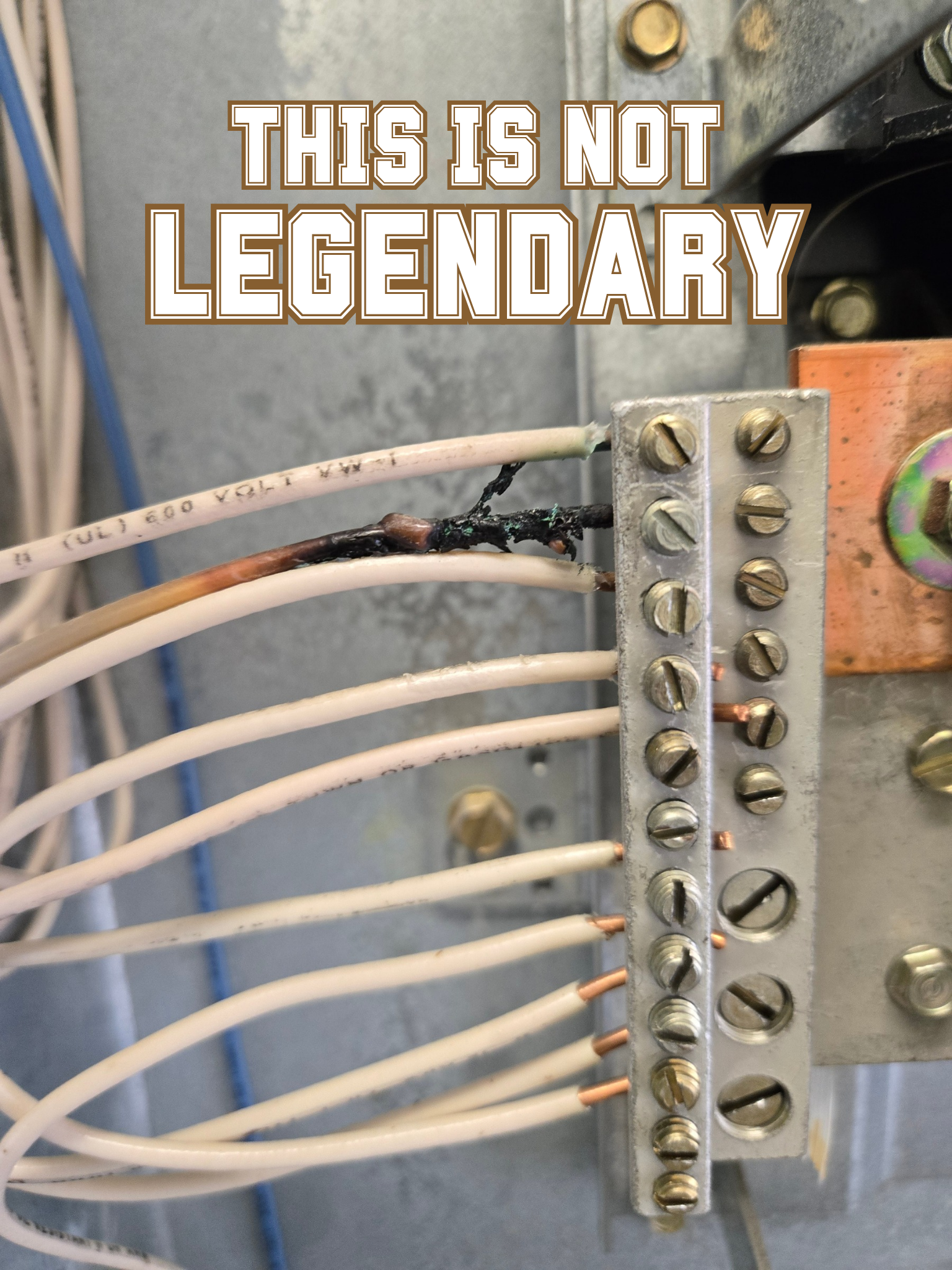
Some of the most concerning electrical issues we've found looked completely normal from the outside.
Loose service conductors.
Corroded terminals.
Overheated breakers.
Damaged bus bars.
Burned neutrals.
Many of them were still supplying power.
Electricity is funny that way.
It will often keep working long after it has started complaining.
Why This Matters
The goal of an electrical inspection isn't to determine whether something works.
Most of the time, we already know it works.
The lights are on.
The refrigerator is running.
The television works.
The goal is determining whether the system is operating safely and reliably.
Those are two different questions.
The Bottom Line
A smoke detector with a dead battery still hangs on the ceiling.
A bald tire still holds air.
And an electrical problem can still provide power.
The fact that something works today doesn't always tell us what it will do tomorrow.
That's why electricians spend so much time looking beyond whether something turns on.
Because "it works" is a starting point.
"It's safe" is the goal.
Stay legendary.
